
Dr Paul Gwynne · Renaissance Scholar & Professor

Paul Gwynne

Renaissance Scholar & Professor

Department of Humanities · Libera Università di Roma

Dr Paul Gwynne is a scholar of the Renaissance and a professor whose research has produced the definitive trilogy reviewing the production of Neo-Latin poetry in Rome between 1480 and 1580 — a century in which the popes, princes and artists of the Eternal City became the patrons, subjects and readers of a remarkable Latin literary culture.

Dr Paul Gwynne

Publications

Books

Four monographs and studies, together reviewing a century of Neo-Latin poetic production at the heart of Renaissance Rome.

I

Poets and Princes: The Panegyric Poetry of Johannes Michael Nagonius

Brepols, 2012

A study of the Italian-born humanist poet Johannes Michael Nagonius, whose polished Latin panegyrics were addressed to the crowned heads and princes of Europe. The book recovers a professional court poet whose career demonstrates how classical praise poetry was renewed as a diplomatic currency across the courts of Renaissance Europe.

Significance: the first volume of the trilogy, establishing the method of reading Neo-Latin poetry as a record of political and patronage realities.
II

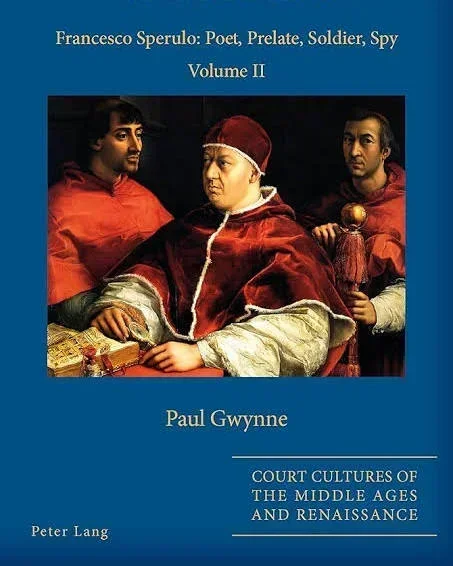
Patterns of Patronage in Renaissance Rome: Francesco Sperulo

Book cover: Francesco Sperulo: Poet, Prelate, Soldier, Spy, Volume II, by Paul Gwynne

Peter Lang, 2015 · Two volumes, more than 1,100 pages

An exhaustive two-volume study of the poet Francesco Sperulo and the patrons he served. Sperulo's vast poetic output brings the reader face to face with Cesare Borgia, Leonardo da Vinci, Raphael and Pope Julius II, documenting in verse the buildings, collections and ambitions of papal Rome.

Significance: the centrepiece of the trilogy — a monument of scholarship mapping the full pattern of poetic patronage in early sixteenth-century Rome.

III

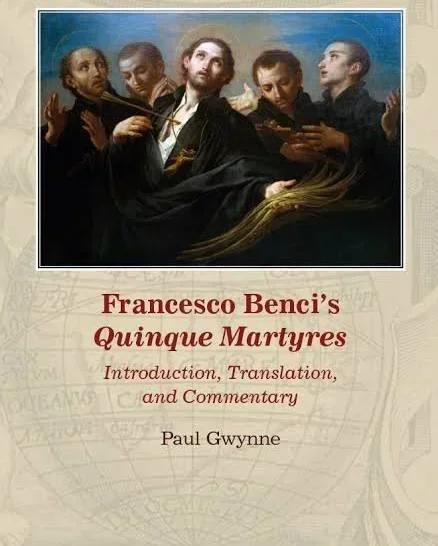
Francesco Benci's Quinque Martyres

Book cover: Francesco Benci's Quinque Martyres, by Paul Gwynne

Brill, 2018

An edition and study of the Quinque martyres of 1583, Francesco Benci's epic account of the five Jesuit missionaries martyred in 1570 on their way to Goa. The poem stands as the great Neo-Latin epic of the late sixteenth century, carrying the story of Rome's poetry to the threshold of 1580 and beyond, into the age of global mission.

Significance: the concluding volume of the trilogy, closing the century of Roman Neo-Latin poetry that began around 1480.

IV

The Economics of Poetry

Co-authored with Bernhard Schirg

A co-authored study with Bernhard Schirg examining the material conditions of Neo-Latin poetry: who paid for poems, what they cost, and how the economy of patronage shaped what was written and preserved.

Significance: a companion to the trilogy, opening the financial machinery behind the Roman poetic world.

The Project

The Rome Trilogy, 1480–1580

Across three monographs — Poets and Princes (Brepols, 2012), Patterns of Patronage in Renaissance Rome: Francesco Sperulo (Peter Lang, 2015) and Francesco Benci's Quinque Martyres (Brill, 2018) — Dr Gwynne reviews a full century of Neo-Latin poetry production in Rome, from the courtly panegyrics of the 1480s to the missionary epic of 1583. Together they form the definitive account of a literary culture in which poets such as Nagonius, Sperulo and Benci celebrated the princes, popes and artists — Cesare Borgia, Julius II, Leonardo da Vinci, Raphael — of Renaissance Rome.

Beyond the trilogy

Other Work

The Story of Painting

Dorling Kindersley

Dr Gwynne contributed expert entries to Dorling Kindersley's The Story of Painting, bringing Renaissance scholarship to a wide general readership.

Enquiries

Contact

For scholarly enquiries, invitations to speak, or questions about the Rome trilogy, please use the form below.